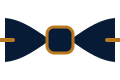
Self-tie bow ties
A self-tie bow tie is a single shaped band that wraps around the collar and forms its own knot. The finished bow is rarely perfectly symmetrical, which is part of its appeal. Small differences between the loops give it movement and make the tie look worn rather than attached.
Choose self-tie when the dress code is formal, when you want the best control over proportion, or when the untied look at the end of an evening matters. Check the maker’s neck-size range and adjustment method before buying.
Pre-tied bow ties
A pre-tied bow is permanently formed and attached to an adjustable band. Good versions use the same fabrics as self-tie models and hide the fastening neatly under the collar. They suit uniforms, large wedding parties, performers, younger wearers and anyone who values consistent placement.
The main weakness is rigidity. A very flat, perfectly identical bow can look mass-produced, especially when the fabric is glossy. Look for some depth in the folds and a knot that is proportionate to the wings.
Clip-on bow ties
Clip-ons attach at the front of the collar rather than wrapping around the neck. They are useful where a neck band could be unsafe or inconvenient, including some workplaces and children’s wear. Their fit is limited by collar construction, so test stability before relying on one for a long event.
Construction comparison
| Type | Best for | Strength | Trade-off |
|---|---|---|---|
| Self-tie | Formalwear, personal style, adjustable proportion | Natural shape and full control | Requires practice |
| Pre-tied | Uniformity, speed, wedding parties | Quick and consistent | Can look rigid if poorly made |
| Clip-on | Specific safety or convenience needs | No neck band | Least adjustable and may shift |
Which type should you own?
Many people benefit from one versatile self-tie bow and one reliable pre-tied bow. The self-tie handles formal and expressive dressing; the pre-tied version covers rushed mornings, travel and situations where a precise uniform look matters.